HOPPER MEETS WARHOL
The Summer Behind the Window -
The Danger to the Ecosystem - "N05-A"
The photographs of Pamela Gagliardi emerge at the intersection of street photography, painting, and poster art. They draw from the documentary tradition of street photography—people in public spaces, casual, unposed—and at the same time, they radically break from it. Where classic street photography relies on authenticity and spontaneity, Gagliardi transforms the scenes through intense color saturation, clear surfaces, and framing that creates distance. Reality appears like a dream, the banal like a still from a film.
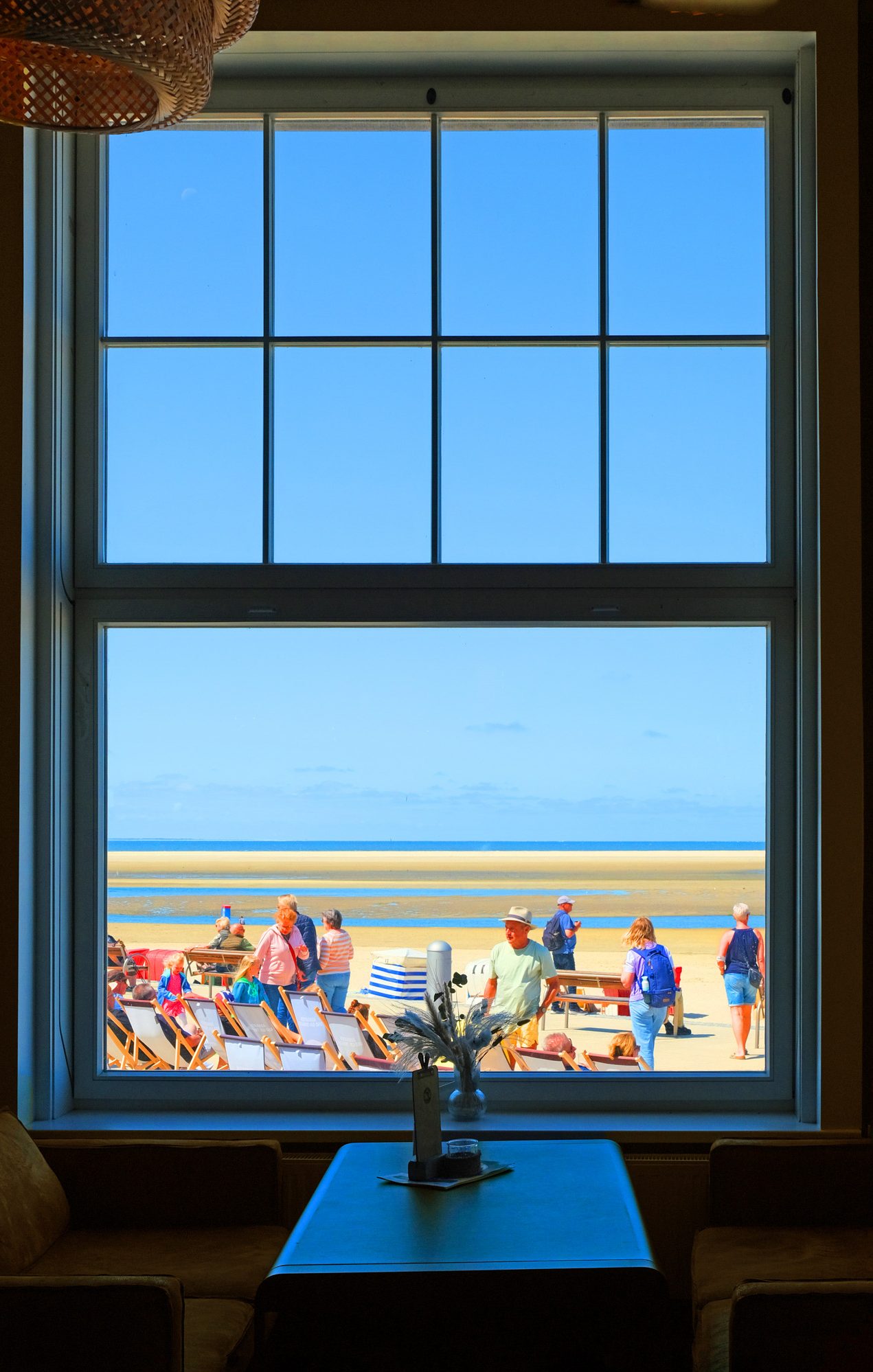
The series L’estate dietro la finestra works with a strong motif: the view through the window. This visual principle creates distance, marking the boundary between the observer and the scene, the inside and the outside, participation and exclusion.
The viewers see a colorful world of sky, sand, and sea—a stage where people become both protagonists and extras. Movement and stillness blend: the fleeting gesture, the casual waiting, frozen like in a painting.
The vibrancy of the colors, almost exaggerated in a plastic way, echoes the visual language of advertising posters or vacation brochures. But instead of celebrating lightness, it opens up an ambiguous world: a “Barbie reality” that promises joy, but reveals distance and artificiality.
The North Sea, as the backdrop for German vacation culture, is transformed into a scene reminiscent of Italy—posters of daily life of Germans on holiday. Here, Italy does not appear as a place, but as an idea, an image, a projection surface: a promise of sun and Dolce Vita revealed in glaring colors.
Thematically, the series also carries a second tension: the threat to the salt marshes.
The N05-A platform was installed in the summer of 2024, about 20 km north of the island of Borkum, Rottumerplaat, and Schiermonnikoog, and began gas production in March 2025.
Thus, the works develop a dreamlike aesthetic: they appear both familiar and alien, realistic and surreal, like scenes from Jacques Tati’s Vacances de Monsieur Hulot.
The figures move through a world that seems like a stage set—precisely composed, yet created by chance.
L’estate dietro la finestra is therefore more than just a series about vacation. It is a reflection on seeing, being seen, and turning away, on the mask of consumption and leisure, on the fragility of our environment.
And at the same time, if we succeed in looking away, it is a celebration of color, light, and lightness—like the sound of the sea behind every image.
Text by Christian Feichtinger